


Golf Swing Basics: Essential Beginner Golf Swing Tips to improve in 1 practice session
This post contains affiliate links. If you purchase through these links, I may earn a commission at no extra cost to you.
Stepping onto the golf course for the first time can feel overwhelming. The swing looks so tricky, like a dance you haven’t learned. But here’s the good news: you don’t need pro-level strength to hit solid shots. A strong golf swing starts with simple basics that anyone can grasp. This guide breaks down beginner golf swing tips into clear steps. You’ll build a solid foundation right away, focusing on grip, stance, and more. Patience matters here. Stick with these moves through practice, and you’ll see real progress without chasing perfection on day one.
Grip: The Only Connection to the Club
Your grip sets the tone for every great golf swing. It’s how you link your hands to the club, and it controls the face at impact. Get this wrong, and your shots slice or hook without mercy. For beginners, nailing the grip means better control from the start.
Neutral Grip Explained: Finding the “V”
Start with your lead hand, the left one if you’re right-handed. Place it on the club so the handle runs across your fingers, not your palm. Look down: you should see two or three knuckles on your left hand. The “V” shape from your thumb and forefinger points straight at your right shoulder. This keeps the clubface square.
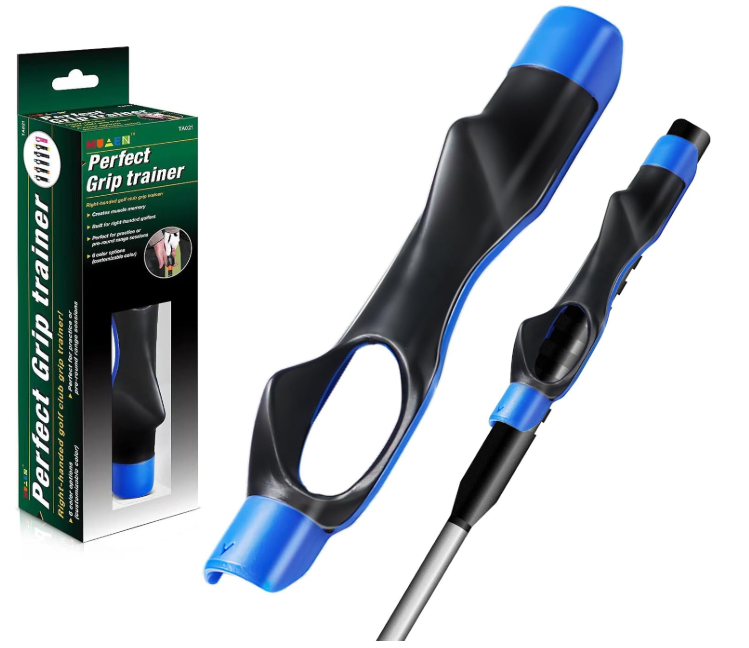
Too many knuckles mean a strong grip, which can hook the ball. Too few, and it’s weak, leading to slices. Check this before each shot. Hold the club lightly, like a tube of toothpaste you don’t want to squeeze. One of the best ways to fix your grip quickly is using a grip trainer. I am usually skeptical of using a lot of tools to try and fix my swing but this grip trainer really made it easy to get comfortable using the right grip.
Interlocking, Overlapping, or Ten-Finger? Choosing Your Style
Grip styles vary, but pick one that feels secure. The overlapping grip, or Vardon, has your pinky on the lead hand rest over the index finger of the trail hand. It promotes unity.
The interlocking grip links those two fingers together. Many pros use this for a tight hold without tension. The ten-finger grip suits juniors or those with small hands, like holding a baseball bat.
For most beginners, try interlocking or overlapping. They connect your hands better than the ten-finger style. Test each on the range to see what clicks.
Pressure Points: Squeezing Too Tight Kills Distance
Grip pressure is key to speed and feel. Squeeze like you’re holding a small bird—firm but not crushing. Too tight, and your wrists lock up, robbing you of that whip-like release. Make sure you use a glove for some extra grip so you don’t need to worry about the club slipping out of your hand. I recommend some of my favorite gloves here.
Think of it this way: a death grip slows everything down. Your forearms tense, and the clubhead drags. Aim for a scale of 1 to 10, where 4 feels relaxed yet in control.
Practice by swinging with eyes closed. Feel the club move freely. Loose hands mean more distance and straighter shots.
Stance and Posture: Setting the Stage for Success
Your setup is like the base of a house. It holds up the whole golf swing, keeping you balanced and on plane. Mess this up, and even a great backswing falls apart. Beginner golf swing tips always stress this spot because it affects every part of your motion.
Athletic Posture: Flexing, Not Bending
Stand tall first, then bend from your hips. Let your knees flex a bit, like you’re ready to squat. Your back stays straight—no slouching or rounding.
Tilt your spine away from the target just a touch. This creates the right angle for your swing path. Pros like this setup because it lets you rotate fully without strain.
Feel athletic, not stiff. Your weight sits on the balls of your feet. This posture boosts power and cuts down on back pain.
Ball Position: Where Should the Tee Be?
Ball spot changes with the club. For irons, place it near the center of your stance. This helps you hit down and compress the ball.
With a driver, move it inside your lead heel. That setup launches the ball high with less spin. Why? It matches your swing arc for better contact.
- Irons: Center for mid-irons, slightly forward for longer ones.
- Woods: Forward to catch the upswing.
- Wedges: Back a tad for clean strikes.
Wrong position leads to thin or fat shots. Experiment on the range to lock it in.
Width and Alignment: Feet Placement
Stance width matches your shoulders—about that apart for irons. Go wider for drivers, narrower for short clubs like wedges.
Align everything parallel to your target. Picture railroad tracks: your feet on one rail, shoulders on the other. Knees and hips follow suit.
This setup squares your path. Misalignment causes pulls or pushes. Use alignment sticks if you can. They make it easy to see and fix.

The Takeaway: Initiating a Smooth Backswing
The backswing starts slow and connected. It’s not about speed yet; focus on width and plane. These beginner golf swing tips help you avoid common early mistakes, like yanking the club inside.
One-Piece Takeaway: Moving the Unit Together
Take the club back as one unit. Shoulders turn, arms extend, and the clubhead follows low and slow. Don’t lift it early with your hands.
This keeps the swing wide and on track. Early wrist hinge, called casting, kills power later. Your triangle of arms and chest stays intact.
Try this drill: Stop when your lead arm parallels the ground. The club should point at the target line. If not, adjust your shoulder turn.
Clubface Control at the Top
At the halfway point, check the face. When your left arm is parallel, it should match your spine angle or toe slightly up. Not open or shut.
An open face at takeaway leads to slices. A closed one hooks. Keep it neutral by watching hand path.
Practice in front of a mirror. See the face square early. This builds good habits for the full backswing.
The Transition and Downswing: Power Generation
Shifting from back to downswing is where magic happens. Beginners often rush it, coming over the top. Smooth sequencing fixes that, turning effort into effortless power.
Sequencing the Downswing: Hips Initiate, Hands Follow
Start with your hips. Unwind them toward the target while your shoulders lag. This kinetic chain builds torque.
Your lower body leads, pulling the upper along. It creates an inside path, avoiding slices. Teaching pros call this the “bump and turn.”
Feel your lead hip clear first. Hands stay back until the last second. This lag packs punch into your shots.
Maintaining Lag: The Secret to Speed
Lag is that angle between your lead arm and shaft. Hold it as your hips fire. Don’t force it—let rotation do the work.
Actively hitting the ball kills lag. Instead, swing to a spot past the ball. Your arms whip through naturally.
Studies show lag adds yards. Pros average 10-15 degrees at the top. Beginners gain speed just by not casting early.
Clearing the Hips Through Impact
Rotate your hips hard post-transition. They should face the target at impact. This clears space for your arms to swing free.
Blocked hips cause across-the-body swings and weak slices. Open them up for solid contact. Your trail hip pulls back as the lead advances.
Drill it: Swing with feet together. Feel the rotation without sway. Add width once balanced.
Impact and Release: The Moment of Truth

Impact decides your shot’s fate. Square face and good compression make it fly straight. Focus here turns average swings into keepers.
Weight Transfer at Impact
Shift 70-80% of your weight to the lead foot by impact. Trail foot rolls up, but stays down till after.
This drives power through the ball. Hanging back on the trail side fats it. Feel pressure build in your lead heel.
Walk-through drills help. Hit half-swings, stepping forward. Builds the habit without thinking.
Proper Release: Passive Hands for Solid Contact
Let your hands roll naturally through impact. Pronate the trail wrist for a square face. No early flip or hold-off.
Active rolling hooks; stiff hands slices. Trust the motion. Your body pulls the arms.
Aim to hit through the ball, not at it. This extends the arc for better turf interaction.
Finish Position: Balanced and Complete
End with your belt facing the target. Weight full on lead foot, chest tall. Hands high, club wrapping around.
A wobbly finish means flaws earlier. Hold it two seconds to check balance. Pros pose like this after great shots.
If you can’t hold it, rewind to stance. A strong finish proves a clean swing.
Conclusion: Building Consistency Through Repetition
Mastering your golf swing takes time, but these basics pay off big. Grip locks in control, posture sets the plane, and sequencing unleashes power. Impact and finish seal the deal for straight, long shots. If you need some more guidance here’s a great article that goes over the steps to a great swing
Key takeaways for beginners:
- Nail a neutral grip with light pressure—it’s your swing’s anchor.
- Align athletic posture and ball position for every club.
- Sequence hips first in the downswing to avoid over-the-top moves.
- Practice one piece at a time, like the one-piece takeaway.
Hit the range often. Film your swing if possible. In a few months, you’ll crush those beginner golf swing tips into real results. Grab your clubs and start today—what’s your next shot waiting for?