
Best Golf Balls for Beginners in 2026: Your No-Nonsense Buying Guide
This post contains affiliate links. If you purchase through these links, I may earn a commission at no extra cost to you.
So You Just Picked Up Golf. Here’s the Thing About Balls.
Let me guess — you watched a few YouTube swings, grabbed some clubs, and now you’re standing in the sporting goods aisle completely baffled. There are two-piece balls, three-piece balls, urethane covers, ionomer covers, compressions ranging from 30 to 110… it’s a lot. Way too much for someone who just wants to, y’know, hit the ball straight and not lose twelve of them in the woods.
Here’s the honest truth: as a beginner, the ball you choose matters — but not in the way tour pros make it sound. You don’t need a Titleist Pro V1. What you need is a ball that forgives your mishits, flies reasonably far, feels decent on the rare occasion you flush it, and doesn’t cost a fortune when you chunk it into the pond on hole 4.
This guide breaks down the best golf balls for beginners in 2026, answers every question you probably have (and a few you didn’t know to ask), and helps you stop overthinking this part of the game. Let’s go.
What Should Beginners Actually Look for in a Golf Ball?
Before we get into specific picks, let’s make sure you know what matters — and what doesn’t.
Compression: This is a measure of how much the ball compresses when you hit it. Low compression (below 70) is great for beginners because it responds well to slower swing speeds, giving you more distance without needing to swing out of your shoes. High compression balls are built for players who swing 100+ mph. Spoiler: that’s probably not you yet, and that’s totally fine.
Construction (2-piece vs 3-piece): 2-piece balls have a simple core and cover. They’re durable, straight-flying, and forgiving. Perfect for beginners. 3-piece balls add a mantle layer for more spin control — great for better players, overkill (and expensive) for new golfers.
Feel: Soft feel helps on chips and putts and just makes golf more enjoyable. Look for balls described as “soft” or “ultra-soft.”
Price: You will lose golf balls. A lot of them. Budget-friendly balls in the $20–$30/dozen range are smart choices when you’re starting out.
Visibility: High-vis yellow or orange balls are genuinely useful if you struggle to track shots in bright sky or rough. Don’t sleep on colored golf balls — they can save you a ton of time searching.
The 4 Best Golf Balls for Beginners (2026 Picks)
Alright, here’s what you came for. I’ve rounded up the top beginner-friendly golf balls based on feel, forgiveness, distance, and value.
| Ball | Best For | Compression | Pieces | Price/Dozen |
|---|---|---|---|---|
| Callaway Supersoft | Best overall for beginners | ~38 (ultra-low) | 2-piece | ~$28 |
| Titleist TruFeel | Soft feel + distance | ~65 (low) | 2-piece | ~$30 |
| TaylorMade Distance+ | Maximum distance | ~70 | 2-piece | ~$25 |
| Kirkland Signature | Best value overall | ~90 | 3-piece | ~$28 (bulk) |
1. Callaway Supersoft — Best Overall Beginner Golf Ball
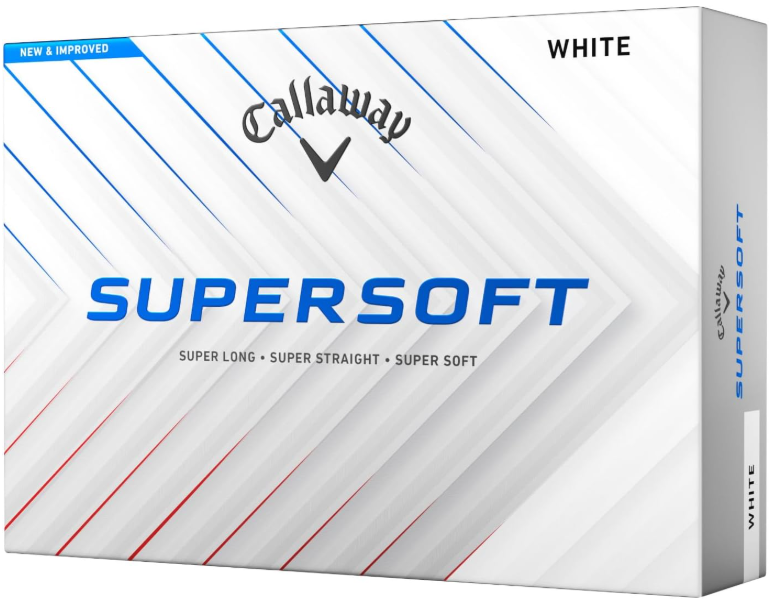
If I had to pick just one ball to recommend to every new golfer, it’s the Callaway Supersoft. The name says it all — this thing has an ultra-low compression rating of around 38, which means even a slow swing speed produces decent distance and a satisfying feel. It launches high, flies pretty straight (low spin off the driver helps reduce hooks and slices), and has been a top seller for years for good reason.
Why it works for beginners: Low compression, high launch, straight flight, and great feel. Available in white and yellow for better visibility. Durable enough to survive a rough round without scuffing up.
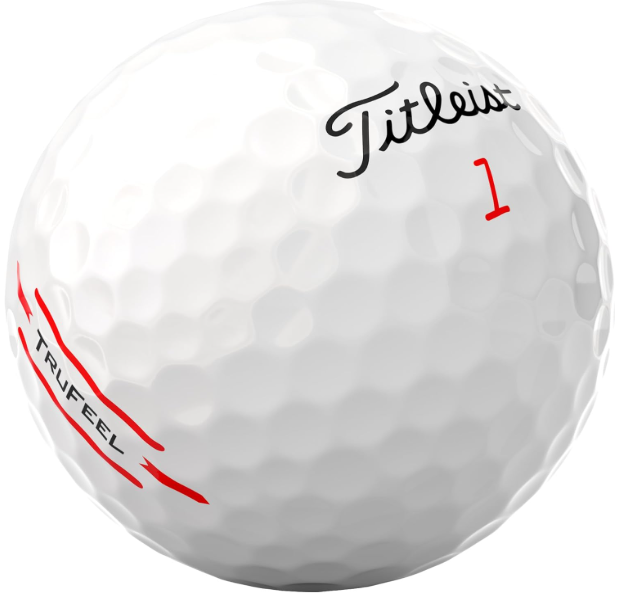
2. Titleist TruFeel — Best Soft Feel Ball for New Golfers
Titleist makes the most famous ball in golf (the Pro V1), but the TruFeel is the brand’s entry-level offering — and it’s genuinely excellent. Compression sits around 65, it has a very soft feel off the putter face, and it goes plenty far without requiring a perfect strike. The TruFeel tends to hold up well and is priced approachably for a Titleist product.
Why it works for beginners: Titleist quality at a beginner price point. Great for players who want a soft feel and care about brand reputation.
3. TaylorMade Distance+ — Best Distance Golf Ball for Beginners
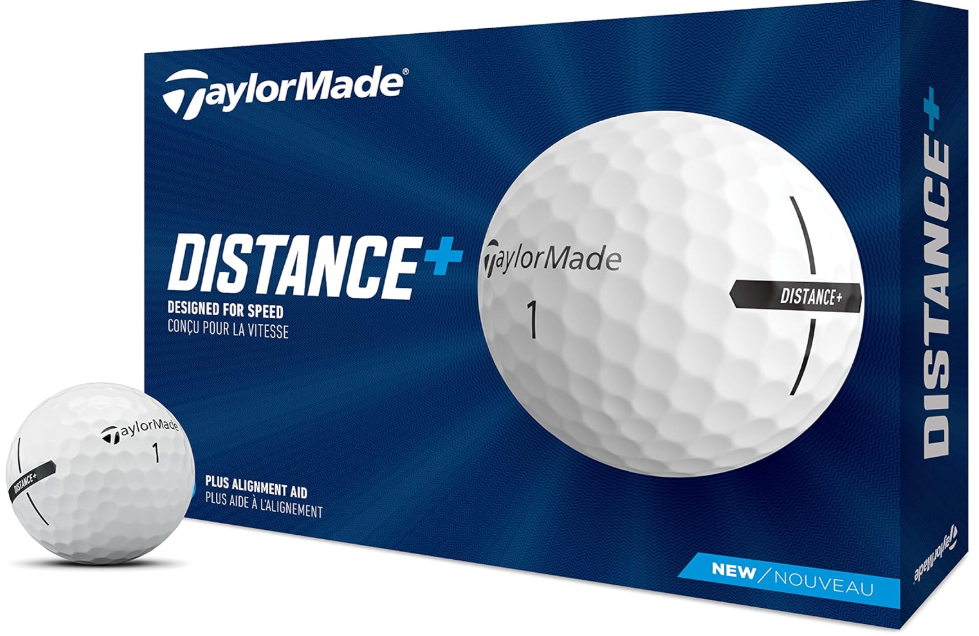
The name is the pitch. TaylorMade’s Distance+ is built around a high-energy core that maximizes carry — useful when you’re still figuring out how to generate consistent clubhead speed. The ionomer cover is durable, and the ball keeps things simple: hit it, find it (hopefully), hit it again.
Why it works for beginners: More distance, simple 2-piece design, good durability. Great for players who feel they’re losing too much yardage.
4. Kirkland Signature — Best Value Golf Ball for Many Beginners
Costco’s Kirkland Signature balls are a weird phenomenon — they outperform their price tag by a wide margin. You get a multi-layer construction with a responsive feel and decent spin control for a fraction of what similar balls cost. The catch? You need a Costco membership, and they sell in bulk. But if you play regularly, that’s actually fine.
Why it works for beginners: Outstanding performance-per-dollar. Multi-layer ball at 2-piece prices. A great intermediate step when you’re improving.
Frequently Asked Questions About Golf Balls for Beginners
Should beginners use soft or hard golf balls?
Soft, almost always. A softer golf ball (lower compression) is more forgiving on off-center hits and helps slower swing speeds get more distance. Hard balls like the Pro V1x are designed for players who swing very fast — the hardness only helps when you can compress the ball fully. Until you’re consistently swinging 90+ mph, go soft.
Does golf ball compression matter for beginners?
Yes, and it’s probably the most important spec to understand. Think of compression like a spring — if you don’t hit it hard enough, the spring barely moves. Low compression balls (under 70) respond to slower swings. High compression balls need fast swings. For most beginners with swing speeds under 85 mph, a ball in the 40–70 compression range is ideal.
Are cheap golf balls okay for new golfers?
Totally. In fact, I’d argue cheap golf balls are the smart choice for beginners. You’re going to lose them — in water hazards, out of bounds, deep in the rough. Spending $5 per ball when you’re still learning is a great way to lose $50 on a bad day. A quality budget ball like the Srixon Distance or Kirkland Signature performs well enough that it won’t hold back your game.
What is the difference between 2-piece and 3-piece golf balls for beginners?
A 2-piece ball has a solid core and a durable outer cover. It prioritizes distance, durability, and straight flight. Perfect for beginners. A 3-piece ball adds a middle “mantle” layer to control spin — useful for shaping shots, but overkill (and more expensive) when you’re just starting out. Stick with 2-piece until you’re consistently breaking 90.
Which golf balls help with slices and hooks for beginners?
Low-spin golf balls are your best friend here. Balls like the Callaway Supersoft, Srixon Distance, and TaylorMade Distance+ all produce low spin off the driver, which helps reduce the sidespin that causes slices and hooks. They’re sometimes marketed as “straight-flight” balls. That said, ball selection alone won’t fix a severe slice — you’ll want to work on swing fundamentals too.
How many golf balls should a beginner carry in a round?
At least a dozen. No joke. A beginner round can easily burn through 6–10 balls depending on the course. Water hazards are particularly merciless. I’d say carry 12, expect to use 6, and feel good if you finish with 8. Buying in bulk (like Kirkland at Costco or value packs online) makes the economics much more manageable.
Should beginners use premium tour balls like Pro V1?
Short answer: no. The Pro V1 is a fantastic ball — for scratch golfers and tour players. It’s a high-compression, high-spin ball that costs $55+ per dozen. For a beginner, you’re paying for features you can’t use yet. The high spin will actually amplify your bad shots, not help them. Save the Pro V1 experiment for when you’re consistently breaking 80.
Are colored golf balls better for beginners?
They can be, genuinely. High-visibility yellow and orange golf balls are much easier to track in flight against a blue sky or overcast day, and easier to spot in light rough. The Callaway Supersoft comes in yellow, and most major brands offer colored options. If you struggle to see where your ball went, go yellow. No shame in it — it’ll save you time and frustration.
How often should a beginner replace their golf balls?
Replace a ball immediately if it’s cracked, cut, or significantly deformed. Surface scuffs from cart paths or trees don’t usually affect performance much, but deep cuts do. Honestly, as a beginner, you’ll lose balls faster than they wear out. If you’re playing the same ball for multiple rounds, just inspect it before each hole — if it looks fine, it probably plays fine.
What are the best golf balls for beginners with slow swing speeds?
The Callaway Supersoft (compression ~38) is the top pick, followed by the Titleist TruFeel and Wilson Duo Soft+. These ultra-low compression balls respond to slower swings, launching high and traveling far without requiring aggressive speed. If your driver swing is under 75 mph, low compression is especially critical for getting any meaningful distance.
What golf balls are best for senior beginners?
The same advice applies — low compression is the priority. The Callaway Supersoft, Titleist TruFeel, and Srixon Soft Feel (worth looking into alongside these picks) all work great for senior golfers with slower swing speeds. Soft feel off the putter helps with distance control, and high-visibility options help with ball tracking. The Supersoft even comes in a “Supersoft MAX” version designed specifically for seniors.

Quick Beginner Golf Ball Buying Guide: How to Choose
Still not sure which ball to grab? Here’s the fastest decision tree I can give you:
- Swing speed under 80 mph? → Callaway Supersoft or Titleist TruFeel (ultra-soft, low compression)
- Want maximum distance? → TaylorMade Distance+
- Want great value at a mid price? → Kirkland Signature or Callaway Supersoft
- Senior golfer? → Callaway Supersoft or Titleist TruFeel
- Bad visibility issues? → Yellow Callaway Supersoft or any hi-vis option
Final Thoughts: Don’t Let Golf Balls Overthink You
Here’s the bottom line: the best golf ball for a beginner is the one that feels good, doesn’t empty your wallet, and helps your shots go (mostly) straight. You don’t need to solve the ball equation on day one. Start with the Callaway Supersoft or Titleist TruFeel, play a few rounds, see how you feel about distance and softness, and adjust from there.
If you need some more help check out this great article from Mygolfspy who lays out his 3 favorite golf balls under $40 here.
Golf is hard enough without agonizing over gear. The ball makes a difference — but your swing, your confidence, and your enjoyment of the game matter way more at this stage. Get the right beginner ball, stop overthinking it, and go have fun out there. Once you pick out a ball check out my post about the basics for a great golf swing.
Ready to stock up? Check out the Callaway Supersoft or TaylorMade Distance+ on the brand websites, or pick up a value pack at your local golf store. And if you’re a Costco member, give those Kirkland Signatures a try — you might just be pleasantly surprised.
Have a favorite beginner ball that’s not on this list? Drop it in the comments — we’d love to hear what’s working for you.